

Want to pick a name for your podcast show or looking for some good podcast name generators? This guide should make the process a little easier.
They say all you need to do is start, and things will follow. Podcasts pretty much work the same way; once you start recording, you understand the process better, figure out your style, and slowly improve things along the way. But choosing a podcast name is one of those things you need to get right before you even record the first episode or start writing your podcast script.
I once tried almost 50 podcast name generators while helping a friend pick a name for a podcast, and honestly, most of them were rubbish. A lot of these tools simply mixed random words, added something that sounded remotely related to the topic, and threw a bunch of names on the screen. A few, however, were actually helpful and gave us ideas we could build on.
A good podcast name should reflect what your show is about, match its overall vibe, and be easy enough for people to remember when they want to find it again. It doesn’t necessarily have to explain every little thing about your podcast, but it shouldn’t leave people completely confused either.
Be it choosing a name through a podcast name generator or creating one entirely on your own, let’s first understand what actually makes a good podcast name and the checks you should do before settling on one.
Welcome, this is Ashutosh, and here I am with another Tiny Quip guide on how to name a podcast, along with a few podcast name generators that are actually worth trying.
Your Audience is Yawning
Two things can make your audience sleepy while listening to your podcast. One is a boring script, and the second is poor audio.
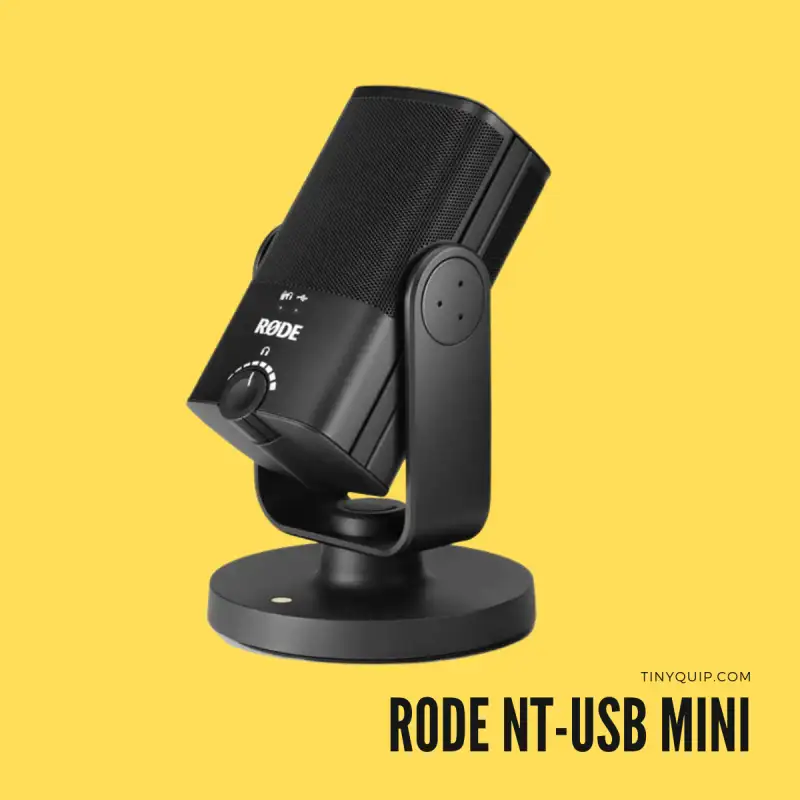
Here are my favorite 10 best microphones for podcasters that will make you sound-sick professional. And also budget-friendly for beginners and professionals.
How to Pick a Podcast Name That Reflects Your Show
Your podcast name is one of the first things your audience notices even before listening to an episode. Along with your cover art, it gives people their first impression of the show and, to some extent, tells them whether this is something they would want to explore further.
Of course, a brilliant name cannot save a boring podcast, and a simple name does not stop a genuinely good show from becoming popular. But since you have the chance to choose a good name right at the beginning, there is no reason to make things unnecessarily difficult for yourself later.
Here are a few things I suggest considering when you start working on podcast name ideas.
1. Define Your Podcast Theme
Before trying to find a catchy podcast name, you need to know what you are actually going to talk about. It sounds obvious, but having only a broad category in mind makes naming much harder.
For example, “business” is a category, but a podcast where you speak with small business owners about the mistakes they made while growing their companies already gives you much more to work with. You suddenly have words and ideas around mistakes, growth, founders, lessons, businesses, building, and real experiences.
The same goes for almost every niche. Instead of only defining your podcast as technology, sports, finance, or movies, think about the particular angle you are bringing to it and the kind of audience you expect to listen.
Once you have some clarity around the theme and direction of your show, finding a podcast name becomes considerably easier.
2. Brainstorm Keywords and Phrases
Once the theme is clear, start writing down words and phrases related to your podcast. These don’t need to be finished names yet; they can simply be topics, emotions, adjectives, actions, phrases, or anything else that represents what you are trying to create.
I prefer putting everything on a list first and then striking off the words that feel boring, forced, or unrelated. When only the more interesting ones remain, you can start combining them, shortening them, or using them as inspiration for something entirely different.
If your personality is an important part of the show, you can also build the podcast around your own name. The Joe Rogan Experience is an obvious example where the personality behind the show became a major part of the brand itself. This approach works especially well when people already know you or when your opinions and personality are one of the main reasons people would listen.
If you are just getting started and nobody knows who you are yet, using only your name may not tell a potential listener much about the show. In such cases, pairing your name with an idea or theme can make it much easier to understand.
3. Descriptive Is Helpful, but It Doesn’t Have to Be Boring
In the older version of this guide, I suggested that descriptive phrases were always the best option. I would change that advice today because a podcast name can work perfectly well without describing the entire show.
A descriptive name has an obvious advantage: someone seeing it for the first time can quickly understand what the podcast is likely about. But if you make it too descriptive, you can end up with something that sounds more like a category than an actual brand.
There is nothing memorable about calling a show The Business Podcast or The Technology Podcast. The names explain the subject, but thousands of other creators could comfortably use something similar.
You can instead take the central idea of your show and give it a little personality. Wordplay, familiar expressions, clever phrases, or even slightly abstract names can work well as long as they still make sense once someone learns what the show is about.
I would also avoid relying too heavily on current trends or pop-culture references unless they genuinely belong to your show’s identity. Trends change quickly, and a name that sounds incredibly clever today can start feeling dated a couple of years later.
4. Keep the Name Short and Easy to Say
You are going to say your podcast name a lot. It will appear in your introduction, your guests may mention it, and hopefully, listeners will recommend it to other people. This makes pronunciation and memorability much more important than they may initially seem.
You don’t need to force every podcast name into two words, but shorter names usually work better because they are easier to remember, fit nicely on cover art, and don’t get awkward when someone says them aloud.
Also be careful with unusual spellings. Replacing letters just to make a common word look different may seem clever visually, but imagine somebody hearing the name and later trying to search for it. If you constantly need to explain how your podcast name is spelled, you have created an extra hurdle for no real benefit.
A simple test is to say the name to someone without showing them the spelling and ask them to search for it. If they find it easily, that’s usually a good sign.
5. Don’t Pick a Name Your Podcast Will Outgrow
This is easy to overlook when your show is still only an idea.
Suppose you start a podcast entirely about Instagram growth and name it something around Instagram. A year or two later, the show starts covering YouTube, newsletters, creator businesses, websites, and other ways to build an online audience. The original name may suddenly feel too narrow even though the show itself has naturally evolved.
You don’t need to make the name so broad that it loses all meaning, but it is worth thinking a little ahead. Ask yourself whether the same name would still make sense if your podcast succeeds and you are still creating episodes three or five years from now.
If the answer is no, it may be better to give yourself a little more breathing room right from the beginning.
6. You Don’t Always Need “Podcast” in the Name
A lot of new creators automatically put “Podcast” at the end of whatever name they choose. There is nothing wrong with doing this, but in most cases, it doesn’t really add anything.
Someone seeing your show inside Apple Podcasts or Spotify already knows it is a podcast, so the word can sometimes be replaced by something that gives the name more personality.
There are exceptions, particularly if you already run a website, YouTube channel, newsletter, or another property with the same brand name and need to distinguish the podcast from everything else. Otherwise, I wouldn’t add “Podcast” simply because it feels like a requirement.
Check If Your Podcast Name Is Already Taken
Once you finally find a name you like, resist the temptation to immediately create the artwork and announce it everywhere. First, check whether somebody else is already using it.
Two podcasts can technically end up with the same or very similar names, but that doesn’t mean it is a good idea. It can confuse listeners, make your show difficult to search for, and eventually force you to rebrand after you have already spent time building an audience around the original name.
Start by searching the name on major podcast platforms such as Apple Podcasts and Spotify. I would now add YouTube and YouTube Music to this check too, especially since video podcasts have become much more important and many shows now build audiences across both traditional podcast apps and YouTube.
Don’t only search for the exact phrase. Try slightly different spellings and shorter variations because another show may have a name close enough to create the same problem.
Then Google the name. You may discover that there is no podcast using it, but an established company, publication, YouTube channel, product, or creator already owns most of the search results. Again, it doesn’t automatically mean you cannot use the words, but choosing a name that constantly competes with an unrelated established brand is usually unnecessary trouble.
Check the Domain and Social Media Too
We live in the digital era, and at some point you will probably promote your podcast outside podcast directories. This is why I still recommend checking whether a sensible domain and social media username are available before finalizing the name.
You don’t necessarily need the exact .com, and your username doesn’t have to be identical on every social network. Those things have become increasingly difficult to achieve anyway. What matters more is whether you can build a reasonably consistent online identity around the name.
If the website, Instagram handle, YouTube name, and every other useful variation already belong to completely different businesses, I would probably go back to the shortlist and reconsider.
Do a Trademark Check If You Are Building a Serious Brand
This is one check I didn’t include when I originally wrote this article, but it deserves a place here.
Finding no podcast with your name does not automatically mean nobody has trademark rights around something similar. If you are creating a casual show with a few friends, you may not go particularly deep into this, but if you plan to build a business, sell products, attract sponsors, or develop a larger brand around the podcast, it makes sense to check.
You can begin with your country’s official trademark search system and databases such as WIPO’s Global Brand Database. If the podcast is commercially important and you find something similar, getting proper legal advice before investing heavily in the brand is much cheaper than dealing with a naming dispute later.
Test the Name Before You Start Using It
Your close friends, family members, colleagues, and other people around you can be helpful once you have shortlisted a few names. Instead of simply asking which one they like most, give them a little less context and see how they react.
Ask what kind of podcast they imagine when they hear the name, whether they can remember it later, and whether anything about it sounds strange or difficult to pronounce. You may notice something obvious that you completely missed after staring at the same shortlist for several days.
I also like putting the name into an actual sentence. Say something like, “Welcome back to another episode of…” followed by the name. Imagine a guest telling someone, “I recently appeared on…” and see whether the name still sounds natural.
Sometimes a name looks fantastic on a screen and strangely awkward when you actually say it. Since podcasts are an audio medium, I would trust how it sounds almost as much as how it looks.
Best Podcast Name Generators
Now that we know what to look for in a name, we can bring podcast name generators into the picture. They are useful when you have exhausted your own ideas or simply want to see combinations you haven’t thought about yet.
I still wouldn’t completely depend on them. Even with newer AI-powered tools, a generated name can already belong to another podcast, business, or trademark owner. Think of these generators as brainstorming tools rather than machines that hand you a ready-to-use brand.
Here are the ones I find worth checking today.
| Tool | What I Think About It |
|---|---|
| Castos | Castos has improved its podcast name generator quite a bit. You can describe your show, select a tone such as funny, serious, edgy, or inspiring, and even ask it to use things such as rhymes or alliteration. It currently gives you eight ideas and also provides quick links to check suggested names on major podcast platforms. |
| Riverside | Riverside’s generator is still one of the easier tools to use when you just want ideas quickly. You describe your podcast theme, audience, or subject and it creates names around that description. Riverside says its system uses more than one million podcast names as part of the generator, so I would treat the results as inspiration and check every shortlisted name independently. |
| Ausha | Ausha wasn’t part of my original list, but it is now worth adding. Its generator creates names around your podcast description and also includes additional tools such as scoring and an Apple Podcasts availability check. I particularly like that it gives you a little more context than simply dumping random names on the screen. |
| ChatGPT | ChatGPT is still one of my preferred ways to brainstorm because you can actually explain what you want instead of entering only a couple of keywords. Give it your topic, audience, tone, words you like, words you hate, and a few examples, and then keep refining the results until you find an interesting direction. |
You might notice two names missing from the older version of this article: Welder and Spotify’s standalone podcast name generator. I wouldn’t recommend either today. Welder’s old podcast-name tool is no longer something I would rely on, while Spotify now focuses its creator resources more on helping podcasters think through naming rather than offering the old random push-button generator.
And honestly, I don’t think we need ten podcast name generators here. After trying enough of them, most tools eventually start producing different versions of the same generic ideas. Four useful options give you more than enough material to brainstorm with.
A Small Tip When Using ChatGPT or Any AI Name Generator
The quality of the idea usually depends on the information you give the tool. Typing “give me names for a business podcast” will naturally return broad and predictable suggestions.
Instead, try something like: “I am creating a podcast for first-time Indian founders who are building profitable businesses without venture capital. I want the name to sound intelligent and conversational, with a maximum of three words. Avoid words such as hustle, startup, entrepreneur, and grind.”
That one prompt gives the tool much more personality to work with, and you can then pick two or three interesting suggestions and ask for variations around those.
Just remember that an AI tool generating a name does not mean the name is original, available, or safe to use. You still need to do all the checks we discussed earlier.
Frequently Asked Questions [FAQs]
Your podcast name is one of the first points of engagement with your audience. It gives listeners an early idea of the show’s personality, subject, and overall vibe, and it also affects how easily they can remember and find the podcast later. The content will always matter more in the long run, but a clear and memorable name gives the show a better start.
Absolutely. Podcast name generators are useful when you need ideas or want to experiment with words and directions you haven’t considered yourself. I just wouldn’t pick a generated name blindly; customize it to suit your show and check that it isn’t already being used elsewhere.
Castos, Riverside, Ausha, and ChatGPT are the ones I would start with today. They approach the problem slightly differently, so you may find that one gives you better ideas than another depending on how clearly you have already defined your podcast.
It can, especially if you already have a personal brand or your personality is one of the main reasons people would listen. If you are relatively unknown and the subject is more important than the host, adding some context about the show can make the name much easier for a new listener to understand.
I would usually choose another one, particularly if the existing podcast is active or covers a similar subject. Even if a platform technically allows two shows with the same name, it creates unnecessary confusion around search, social media, word-of-mouth recommendations, and potentially trademarks.
Yes, but rebranding becomes more inconvenient once you have built an audience. You may need to update artwork, websites, social media, promotional material, and other references to the old name, so it is worth doing a little extra checking before you launch.
Wrapping Up: How to Name Your Podcast
Choosing a podcast name shouldn’t stop you from ever starting the podcast, but I wouldn’t rush through it either. Define what your show is about, brainstorm a good number of words and phrases, shortlist the ones that actually fit your personality, and then check how they sound when spoken.
Once you have a few strong options, look them up on Apple Podcasts, Spotify, YouTube, Google, domains, and social platforms. If you plan to build a serious commercial brand around the show, add a trademark check before committing to it.
And when your creativity fuel is completely empty, Castos, Riverside, Ausha, and ChatGPT can give you a useful push in a new direction. You don’t necessarily have to use the exact names they create; sometimes one slightly strange suggestion is enough to make you think of the name you actually wanted.
That, to me, is the best use of a podcast name generator.
Before You Leave
Get Our Prime Content Delivered to your Inbox for Free!! Join the Ever-Growing Community… Right Now.
Give this article a quick share,